por help » Qui Mar 02, 2017 08:22
Bom dia, alguma ajuda?
Acho que é para usar a fórmula
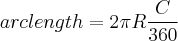
Let r be a positive constant. Consider the cylinder
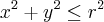
and let C be the part of the cylinder that satisfies

.
c) Let a be the length of the arc along the base circle of C from the point (r,0,0) to the point (
Let b be the length of the line segment from the point ( to the point . Express a and b in terms of .
d) Calculate the area of the side of C with , and express it in terms of r.
-
help
- Novo Usuário

-
- Mensagens: 1
- Registrado em: Qui Mar 02, 2017 08:16
- Formação Escolar: GRADUAÇÃO
- Andamento: cursando
Voltar para Cálculo: Limites, Derivadas e Integrais
Se chegou até aqui, provavelmente tenha interesse pelos tópicos relacionados abaixo.
Aproveite a leitura. Bons estudos!
-
- [calculo] area por integral
 por beel » Dom Nov 20, 2011 22:49
- 1 Respostas
- 1389 Exibições
- Última mensagem por LuizAquino

Seg Nov 21, 2011 00:16
Cálculo: Limites, Derivadas e Integrais
-
- Integral dupla, área.
por ricardosanto » Qui Dez 13, 2012 18:21
- 1 Respostas
- 1989 Exibições
- Última mensagem por Russman
Qui Dez 13, 2012 20:40
Cálculo: Limites, Derivadas e Integrais
-
- [INTEGRAL]Calcular área y=x^2
por krtc » Qua Jul 24, 2013 02:07
- 5 Respostas
- 3767 Exibições
- Última mensagem por Russman
Qua Jul 24, 2013 03:13
Cálculo: Limites, Derivadas e Integrais
-
- Calculo 2 integral de area
por gustavogvm » Ter Set 10, 2013 11:44
- 0 Respostas
- 1444 Exibições
- Última mensagem por gustavogvm
Ter Set 10, 2013 11:44
Cálculo: Limites, Derivadas e Integrais
-
- Calculo de área INTEGRAL
por jccp » Dom Out 06, 2013 15:17
- 1 Respostas
- 2412 Exibições
- Última mensagem por e8group
Dom Out 06, 2013 22:39
Cálculo: Limites, Derivadas e Integrais
Usuários navegando neste fórum: Nenhum usuário registrado e 31 visitantes
Assunto:
Funções
Autor:
Emilia - Sex Dez 03, 2010 13:24
Preciso de ajuda no seguinte problema:
O governo de um Estado Brasileiro mudou a contribuição previdenciária de seus contribuintes. era de 6% sobre qualquer salário; passou para 11% sobre o que excede R$1.200,00 nos salários. Por exemplo, sobre uma salário de R$1.700,00, a contribuição anterior era: 0,06x R$1.700,00 = R$102,00; e a atual é: 0,11x(R$1.700,00 - R$1.200,00) = R$55,00.
i. Determine as funções que fornecem o valor das contribuições em função do valor x do salário antes e depois da mudança na forma de cobrança.
ii. Esboce seus gráficos.
iii. Determine os valores de salários para os quais:
- a contribuição diminuiu;
- a contribuição permaneceu a mesma;
- a contribuição aumentou.
Powered by phpBB © phpBB Group.
phpBB Mobile / SEO by Artodia.